
Hyde County Criminal Records
A criminal court record in Hyde County is the file the court maintains after a charge, citation, warrant, indictment, information, or magistrate process becomes a court matter. The record can include the initiating charge, defendant name, case number, court division, bond or conditions, attorney information, docket entries, plea, verdict or dismissal, sentence, costs, restitution, probation terms, and failure-to-appear history. The record is kept by the Hyde County Clerk of Superior Court, whose office handles Criminal District and Criminal Superior files.
Hyde County does not run a separate local court system. The county is part of North Carolina Prosecutorial District 2, Superior Court District 2, and District Court District 2. Superior Court handles felony criminal cases and appeals from District Court misdemeanor or infraction convictions. District Court handles misdemeanors, infractions, traffic offenses, juvenile matters, and initial lower-level proceedings. The full case result belongs in the criminal court file; the narrower charge list is treated separately on the Hyde County arrest records and court charges page.
The North Carolina criminal cases help topic is useful for terms such as bond, failure to appear, plea, and disposition. It should be read with Hyde County court records, not as a substitute for the county case file.
The NC Courts criminal case page is the source for this statewide criminal procedure overview.
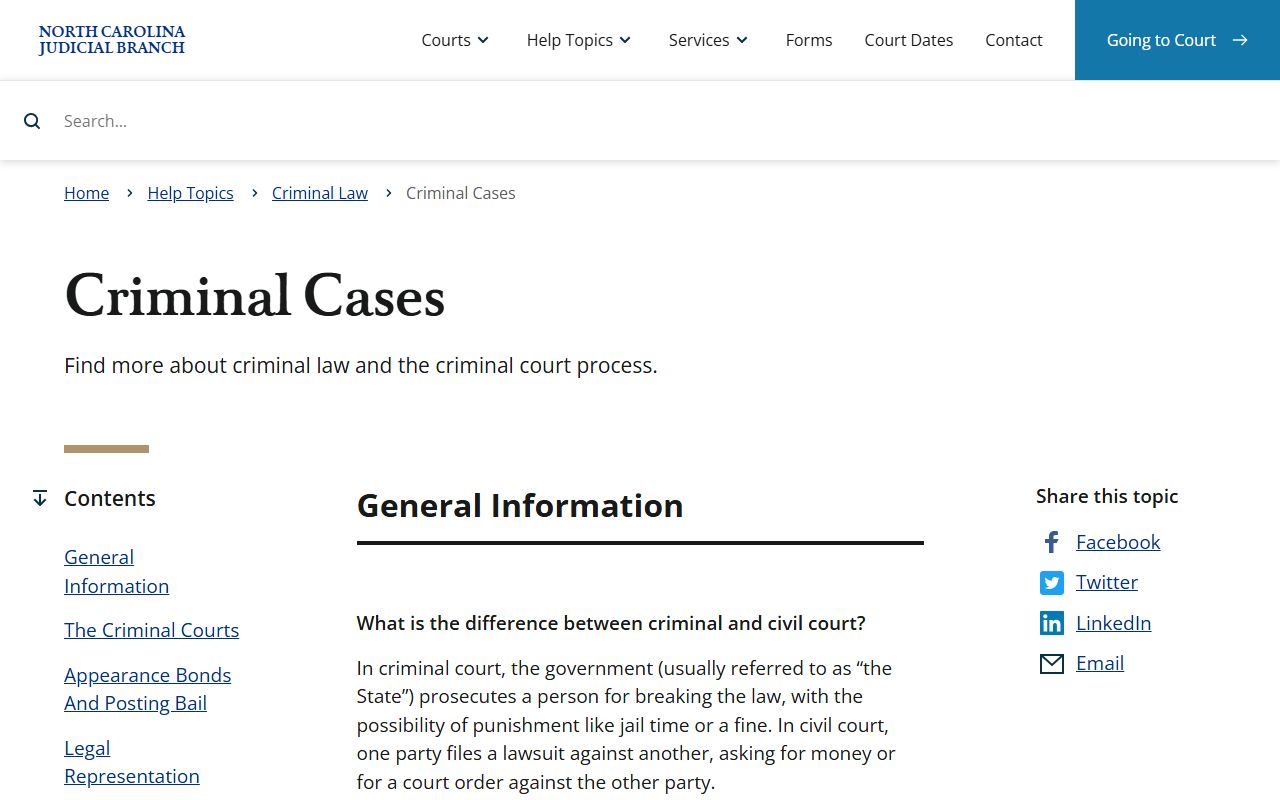
That source helps explain why a Hyde County criminal record should be read as a sequence of court events, not just as a charge name.
Search Hyde County Criminal Cases
The main online channel for Hyde County criminal court records is the NC eCourts Portal. Choose Smart Search for case information and Search Hearings for dates, courtrooms, and judicial-officer details. The portal is statewide, so Hyde County should be selected as the location when the goal is a local case. Portal access can require JavaScript, cookies, and recurring CAPTCHA checks. For certified criminal background searches, the NC Courts criminal background check page says to use the clerk process rather than relying only on Portal.
- Open the NC eCourts Portal and choose Smart Search for court records and case information.
- Search by record number or by person name in Last, First Middle Suffix format.
- Use Advanced Filtering Options and select Hyde County under location.
- Filter by case type, case status, file-date range, SO number, FBI number, or booking number when known.
- Open the result and review the docket, charges, hearings, disposition, and any available public documents.
- Contact the Clerk of Superior Court for certified copies or the AOC-CR-314 certified county criminal search.
| Search Field | Use in Hyde County criminal records |
|---|---|
| Record number | Best when the case number is known. |
| Defendant name | Use Last, First format and wildcard rules when needed. |
| Location | Select Hyde County for local Superior Court and District Court files. |
| Case status | Narrows open, disposed, dismissed, inactive, or other available statuses. |
| File date | Limits results to a start and end filing range. |
| SO, FBI, or booking number | May help with criminal-identification filtering, though public result detail can be limited. |
The criminal background check page is the source for the county-certified search route.
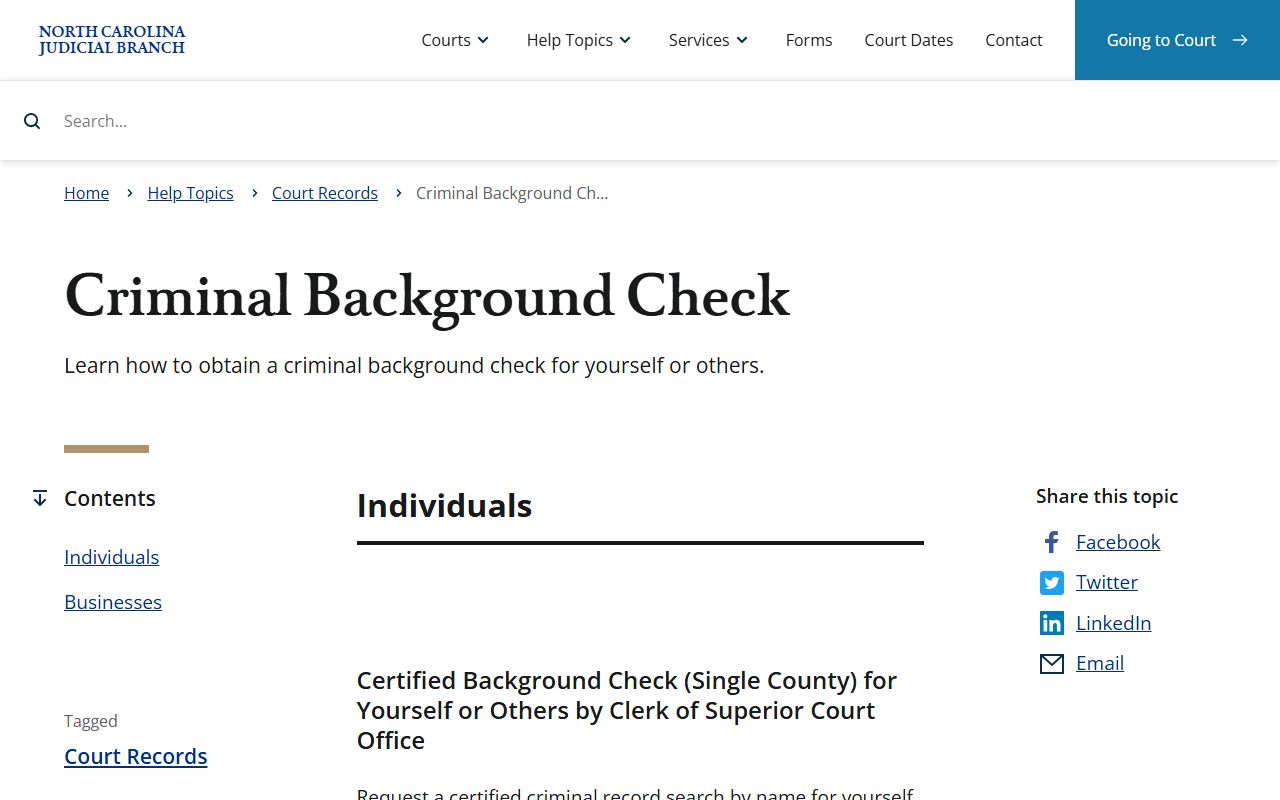
For employment, licensing, or other formal uses, a clerk-certified search is more reliable than a screen result from the public portal.
Hyde County Criminal Case Flow
Criminal court records in Hyde County are easiest to read as a timeline. A misdemeanor or infraction normally starts in District Court. A felony is handled in Superior Court after the proper charging and transfer steps. The District Attorney for Prosecutorial District 2 decides how many charges proceed, whether a charge is reduced or dismissed, and whether a plea, trial, diversion option, or other resolution is appropriate. The NC Conference of District Attorneys court process page explains that misdemeanors, infractions, and juvenile matters are generally in District Court, while felonies are generally in Superior Court.
Case flow: Charges Filed › Arraignment › Pretrial and Motions › Plea or Trial › Disposition › Sentencing
| Stage | What the criminal court record may show |
|---|---|
| Charges filed | Offense text, statute or class, case number, arrest or citation link, and court division. |
| Arraignment | Plea, counsel status, bond conditions, next hearing, and court scheduling notes. |
| Pretrial and motions | Continuances, discovery issues, motions, orders, amended charges, and hearing dates. |
| Plea or trial | Plea entry, trial event, verdict, dismissal, not guilty finding, or negotiated resolution. |
| Disposition and sentencing | Final charge outcome, sentence, probation, costs, restitution, or appeal notice. |
The District Attorneys court process page supports the court-level distinction used in Hyde County criminal records.
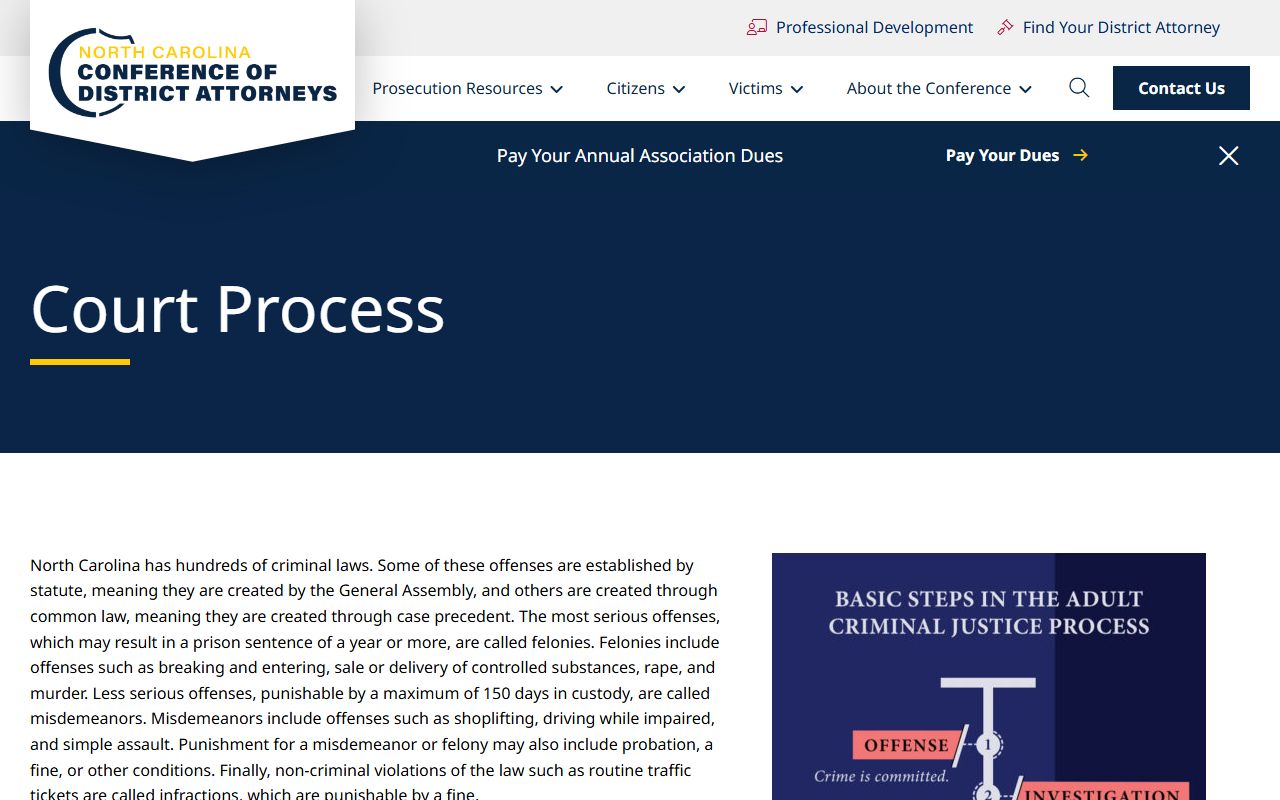
That distinction matters because a felony case file and a misdemeanor case file may be searched in the same Portal but heard in different trial divisions.
What Hyde Criminal Records Show
A Hyde County criminal court record can be broader than a single charge entry. Portal and clerk records may show the case header, parties, attorneys, court level, filing date, hearing dates, docket entries, financial fields, and document availability. Some records may also reference probation, restitution, bond forfeiture, or failure-to-appear events. Public access depends on case type, redaction rules, and whether a document has been sealed, expunged, or withheld by law.
| Field | What it shows |
|---|---|
| Case number | The court's record identifier, used for Smart Search and clerk copy requests. |
| Defendant | The person accused in the criminal case. |
| Court division | District Court for misdemeanors and infractions, or Superior Court for felonies and appeals. |
| Charges | Offense descriptions, classes, statutes, and amended or dismissed charge history when public. |
| Docket entries | Hearings, motions, continuances, orders, pleas, judgments, and appeal notices. |
| Disposition | The outcome, such as guilty, not guilty, dismissed, or another final status. |
| Sentence | Probation, custody, fines, costs, restitution, or other court-ordered terms. |
| Redactions | Protected data such as juvenile matter, sealed material, SSNs, or protected addresses. |
For formal copies, use the Clerk of Superior Court at PO Box 337, Swan Quarter, NC 27885, or call (252) 926-4700. The clerk is the local record custodian for Hyde County criminal records, even when the Portal is the first search tool.
Charges Versus Convictions
A charge in Hyde County criminal court records is an accusation that has entered the court system. A conviction is a final result based on a guilty plea, verdict, or other legally recognized finding. A case file may contain charges that were later dismissed, reduced, consolidated, or changed before sentencing. That is why a charge list should not be read as a conviction list.
| Point | Charge | Conviction |
|---|---|---|
| Meaning | An allegation filed by criminal process. | A final finding or plea with legal effect. |
| Where it appears | Early docket, charging document, warrant, citation, or indictment. | Disposition, judgment, sentencing, and criminal background search result. |
| Can change | Yes, it may be amended, reduced, dismissed, or superseded. | Changes usually require appeal, correction, relief, or expunction. |
| How to confirm | Read the full docket and current charge status. | Check disposition and sentence fields or request a certified search. |
Note: The same arrest can lead to several charges, and each charge can have a different final outcome.
Sealed and Expunged Records
Public access to Hyde County criminal court records is broad, but not absolute. N.C. G.S. 7A-109 requires clerks to keep records, files, dockets, and indexes open to inspection during office hours except where law restricts access. Chapter 15A Article 5 governs expunction categories and procedures for eligible criminal charges and convictions. Juvenile court records, sealed matters, protected personal identifiers, adoption material, and some mental-health or guardianship information are not treated as ordinary public files.
| Point | Sealed | Expunged |
|---|---|---|
| Public visibility | Hidden from ordinary public inspection by law or court order. | Removed from ordinary public criminal-record access after a granted expunction. |
| File status | The court may still retain the record with restricted access. | The eligible record is treated under the expunction statute. |
| Who may still see it | Access depends on the order, statute, and authorized role. | Prosecutors or agencies may retain limited statutory access in some cases. |
| Practical caution | Portal absence does not prove sealing. | Portal absence does not prove expunction. |
The expunction statutes are a core source for criminal record limits in Hyde County.
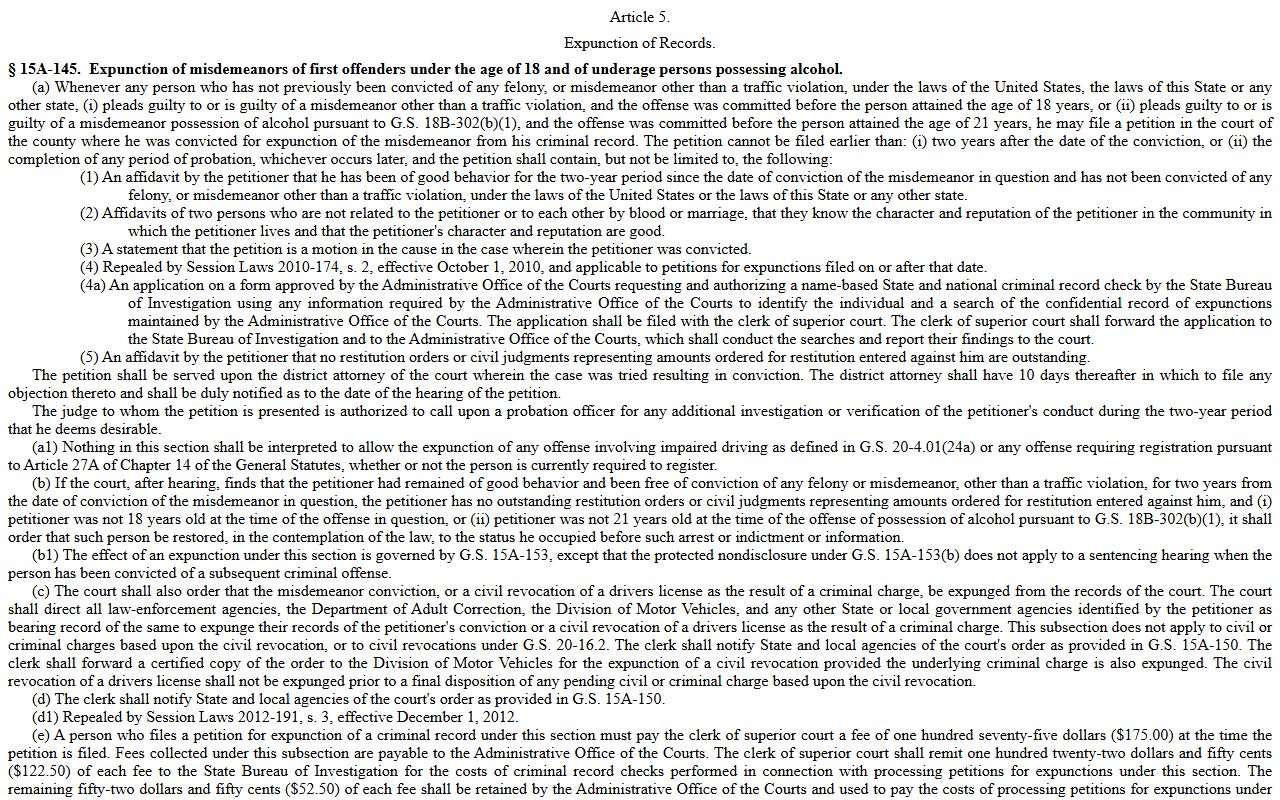
Eligibility depends on the specific charge, disposition, age, prior record, waiting period, and petition category.
The N.C. G.S. 15A-145 source addresses certain first-offender misdemeanor and underage alcohol expunction matters.
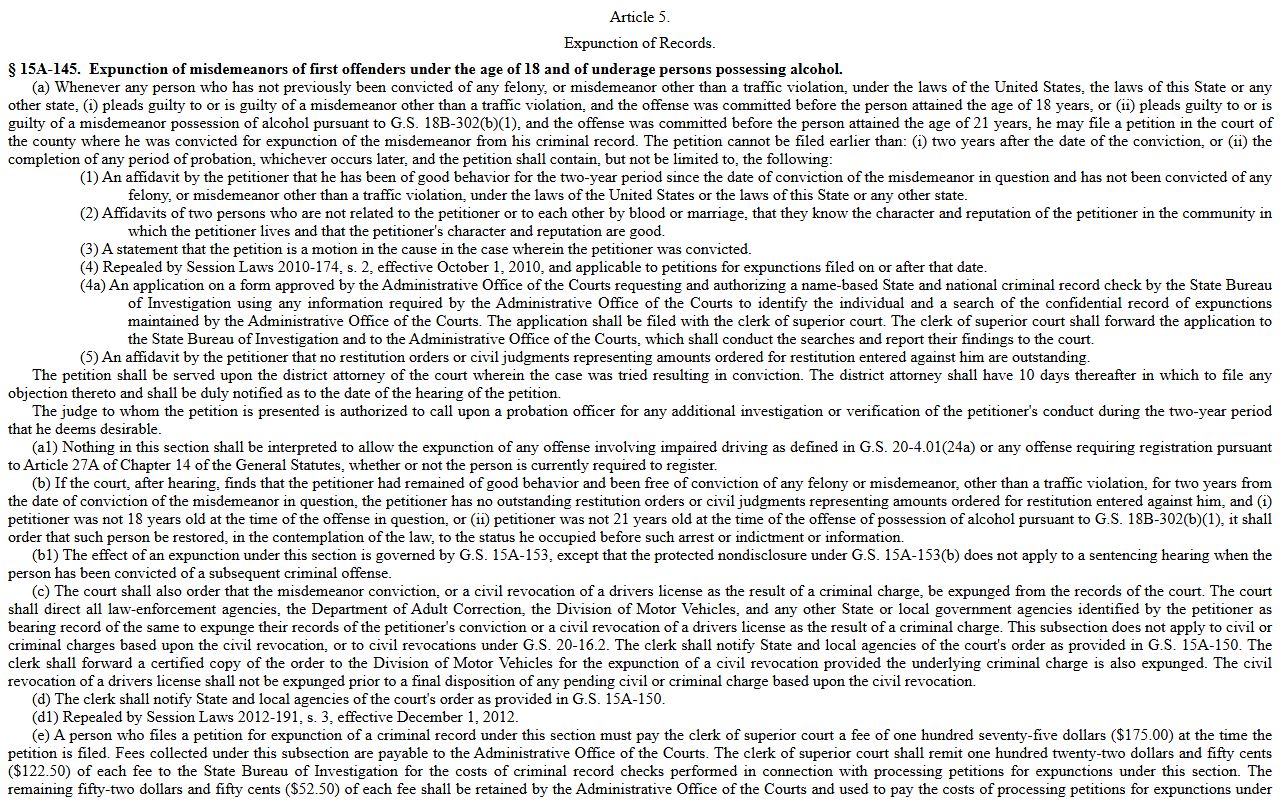
That statute is only one category, so a person should not assume all dismissed charges or convictions use the same expunction route.
Public Access in Hyde County
Hyde County criminal court records can be searched through NC eCourts Portal, requested from the Clerk of Superior Court, checked by hearing search, and reviewed through certified single-county criminal record search when needed. Administrative Judicial Branch records use the Judicial Branch public-record request route, while sheriff records and booking questions go to the Hyde County Sheriff's Department. State prison, probation, and parole records are not county clerk records and belong with NC DAC.
Key access rules: N.C. G.S. 132-1 defines public records broadly. N.C. G.S. 7A-109 covers clerk recordkeeping. N.C. G.S. 7B-3000 restricts juvenile court files.
Certified county criminal searches use Form AOC-CR-314 and a $25 fee according to the research source. The clerk search is county-only, so it should not be treated as a statewide criminal history.